Lebanese Companies in the Eye of the Storm: A History of Turbulence that Makes Business Management Almost Impossible


Dr. Georges Najm-
In classical economic and management literature, the creation of firms is generally viewed as the primary instrument for generating economic value and achieving profitability. As the Austrian economist Joseph Schumpeter notes, the role of the entrepreneur fundamentally lies in innovation and value creation through economic activity (Schumpeter, 1942). Similarly, Michael Porter argues that the core objective of a firm is to achieve a competitive advantage that enables it to create sustainable economic value (Porter, 1985).
Yet this fundamental principle of capitalist economics hardly applies to the Lebanese case. In Lebanon, the primary objective of companies is not the maximization of profit, but simply survival. In other words, resilience and continuity precede any discussion of value creation, while profitability — if it occurs at all — comes only afterward.
Lebanon represents a unique case in the Middle East, and perhaps even in the world. On the one hand, it possesses one of the oldest and most dynamic private sectors in the region. On the other, it operates within one of the most politically unstable and volatile environments globally. Between these two contradictory realities, Lebanese companies are compelled to function under exceptional circumstances, where business management becomes a daily exercise in adaptation and resilience.
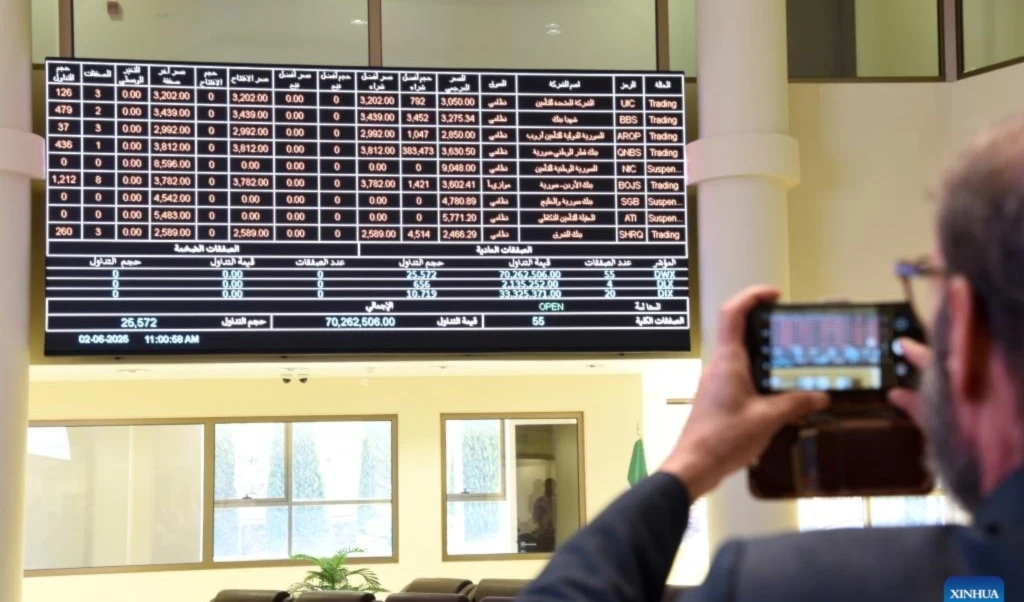
In modern management theory, the concept of VUCA is used to describe environments characterized by high levels of Volatility, Uncertainty, Complexity, and Ambiguity. The concept emerged in strategic studies to describe environments whose evolution is difficult to predict (Bennett & Lemoine, 2014). While the concept is generally used to analyze turbulent business environments, Lebanon represents a near-perfect illustration of such a setting. Political, economic, and security crises constantly intersect, making instability continuous and business management a permanent challenge.
To understand this reality, one must return to Lebanon’s political history, which reveals that instability is not an accidental phenomenon but rather a structural element of the state’s very formation — and consequently of the business environment itself.
A State Born in Division
Many scholars emphasize that Lebanon has faced profound difficulties in state-building since its inception. According to Delatolla (2016), certain states experience structural challenges in the process of state formation, and Lebanon stands as a clear example of such a case. Norton (2000) likewise notes that Lebanon lives under a form of permanent political, social, and economic anxiety, while Harris (2014) argues that the issue of national cohesion has haunted the country since the early twentieth century.
Even the creation of modern Lebanon was not universally accepted. During the formation of “Greater Lebanon,” a significant portion of Christians supported Lebanese independence, while large segments of the Muslim population favored integration into a broader Syrian entity (Delatolla, 2016). The country’s complex sectarian composition further complicates the political landscape, making the political system dependent on a delicate balance among its various communities.
As a result, the Lebanese political system became a textbook example of what is known as consociational democracy, in which power is distributed among different groups to ensure representation (Vaughan, 2018). Yet while this model aims to preserve stability, it often results in slow decision-making and recurrent political crises. This is precisely the reality Lebanon has experienced since its creation — and the environment within which its companies have had to operate ever since.
The Early Years of Independence: The “New Phoenicians” and Lebanon’s Economic Identity
Ultimately, Lebanon emerged in the form we know today. Shortly after its birth, intense debates arose regarding the country’s political and cultural identity. For the purposes of this discussion, if we momentarily set aside these identity debates and the earlier independence question, another intellectual current emerged: the economic and cultural movement known as the “New Phoenicians.”
This movement sought to link Lebanese identity to the legacy of the Phoenician civilization, historically renowned for its commercial skills and maritime openness across the Mediterranean. Some thinkers viewed Lebanon as a modern continuation of this commercial and economic heritage (Harris, 2014).
The movement was led by several intellectuals and writers, most notably Charles Corm and Michel Chiha, who argued that Lebanon represented a civilizational and economic extension of Phoenician maritime trading traditions. This vision later contributed to shaping the image of Lebanon as an open economy based on trade, services, and the private sector (Harris, 2014; Kaufman, 2004).
This perception helped consolidate Lebanon’s reputation as a country open to international trade, financial services, and free-market economics. In this context, an economic culture based on individual initiative and entrepreneurial spirit emerged — largely explaining the central role the private sector has played in Lebanon’s economy across decades (Norton, 2000).
To this day, Lebanon’s economic structure remains indebted to this visionary liberal thinking promoted by the New Phoenician movement. Lebanese businessmen and businesswomen adopted this outward-looking economic vision regardless of their sectarian affiliation. The Lebanese business community included entrepreneurs from across the country’s religious spectrum — Christians, Muslims, Druze, and even members of the once active Lebanese Jewish community.
While much of the population remained absorbed in political struggles surrounding the founding of the Lebanese state and debates over cultural identity, the business community tended to embrace a more pragmatic vision centered on trade and economic openness. Yet this vision was not sufficient to shield the country from deep political tensions that intensified after the creation of Israel and the outbreak of the Arab Israeli conflict, leading to vertical divisions within Lebanese society. Nevertheless, the adoption of the “New Phoenician” perspective by business leaders illustrates the immense historical and political pressures that Lebanon’s business community has faced since the birth of the state.
The Golden Age and Economic Prosperity
Despite political challenges, Lebanon experienced remarkable economic prosperity in the decades following independence. The country adopted a liberal economic model largely driven by the private sector. Trade restrictions were removed, exchange rates were liberalized, and banking secrecy laws were introduced — policies that attracted foreign investment and stimulated economic activity (Norton, 2000).
As a result, Lebanon achieved significant economic growth, earning the nickname “the Switzerland of the Middle East,” while Beirut became known as “the Paris of the Middle East.”
However, this prosperity was not entirely stable. Regional tensions gradually began to affect domestic stability, particularly following the Arab–Israeli wars of 1967 and 1973, as well as the events of Black September in Jordan, which contributed to rising regional tensions and had repercussions for the Lebanese economy.
Civil War: Doing Business Amid Chaos
These tensions culminated in the outbreak of the Lebanese civil war in 1975, a conflict that lasted fifteen years and profoundly reshaped the country. Some scholars have described this period as a “Republic of Militias,” during which the central state lost its ability to impose authority and armed factions replaced state institutions (Hudson, 1997).
During this period, companies no longer interacted with a single state authority but with a complex mosaic of armed groups, each controlling different territories. Business leaders were forced to operate within parallel economic systems, including alternative customs regimes, taxes imposed by militias, and security and social networks that replaced state institutions.
In many cases, companies were compelled to pay what effectively amounted to protection fees to armed groups to ensure the continuity of their operations. Employees faced severe risks when traveling between regions, including kidnapping, detention, or even death at armed checkpoints. Amid thousands of casualties during the war, the mere continuation of economic activity represented an extraordinary achievement.
Post-War Lebanon: Fragile Peace and Repeated Shocks
Following the end of the war in 1990, Lebanon entered a reconstruction phase, particularly in downtown Beirut, which had once symbolized the country’s economic prosperity (Norton, 2000). The private sector breathed a sigh of relief, believing that a long era of instability had finally come to an end.
The country experienced a period of relative stability often referred to as the Pax Syriana. Yet this stability proved short-lived. During the 1990s, Lebanon faced several large-scale Israeli military operations, most notably Operation Accountability (1993) and Operation Grapes of Wrath (1996), which resulted in widespread bombardment across Lebanese territory.
A new phase of instability followed with the assassination of Prime Minister Rafic Hariri in 2005, an event that deeply shook the country’s political and economic stability. Only a year later, the July 2006 war caused massive destruction of Lebanese infrastructure and heavy economic losses. Lebanon thus returned to what had historically been its defining condition: permanent instability.
The Contemporary Economic Collapse
These historical challenges reached their peak with the economic crisis that erupted in 2019, widely considered one of the worst financial crises in modern history. The collapse of the banking system led to the freezing of deposits belonging to both individuals and businesses. While public debate has largely focused on the losses suffered by individual depositors, corporate losses have been equally devastating.
Corporate savings evaporated, including funds allocated to cover employee end-of-service indemnities, forcing many companies to rebuild these reserves from scratch. This crisis was accompanied by an unprecedented collapse of the national currency, a sharp decline in purchasing power, and the near paralysis of state institutions.
Lebanese Companies Between Resilience and Economic Migration
Today, yet another Israeli war — recurring historically under different operational names and varying levels of intensity — adds itself to this long chain of crises that the Lebanese private sector has carried on its shoulders for decades.
Under such circumstances, it is difficult to find a Lebanese business leader who does not ask daily existential questions: How can capital and assets be protected in such a volatile environment? How can high operational costs continue to be sustained? How can companies preserve the jobs upon which thousands of families depend? And how can economic value be created in an environment that often appears hostile to value itself?
These questions make the practice of economic activity in Lebanon an extraordinarily difficult experience — almost a permanent nightmare for business management.
In this context, Lebanese companies face two principal choices: resilience or economic migration. While much is often said in Lebanon about the “brain drain,” the issue of corporate migration must also be addressed — the relocation of capital, what remains of it, and the relocation of employment opportunities.
Lebanon: The Most VUCA Environment in the World?
In light of all the above, Lebanon may represent an extreme example of a VUCA environment. Continuous political volatility, economic uncertainty, institutional complexity, and an ambiguous future combine to make business management in Lebanon extraordinarily challenging.
Yet the Lebanese private sector continues to operate and endure. In this sense, Lebanon may well be one of the most VUCA economic environments in the world — perhaps the clearest example of the capacity of business leaders to operate in the eye of the storm.
Mastering the Art of Survival: The First Rule of Lebanese Companies
Ultimately, what may define the Lebanese economic experience more than anything else is its astonishing ability to endure despite everything. Since the birth of the Lebanese state, the private sector has learned to operate in an environment that never truly knows stability. Decisions must be made under permanent political fog, and companies must constantly reinvent themselves whenever the rules under which they operate collapse.
Yet Lebanese business leaders have never stopped trying — rebuilding what has been destroyed and continuously searching for new ways to survive. It is an economic experience built not on certainty but on constant adaptation and on an almost instinctive ability to improvise in the face of the unknown.
In this context, the words of the French historian Henry Laurens perhaps summarize the nature of Lebanon better than any extended analysis: “If you think you have understood something about Lebanon, it means it has been explained to you incorrectly.”
Even with a careful reading of Lebanon’s history and decades of experience, the Lebanese private sector still struggles to fully grasp the logic of this country. And so it continues to do what it has mastered for generations: improvising in order to survive in the eye of the storm.
Researcher in Marketing Communications; Lecturer at EM Normandie and EM Strasbourg (France) and USEK (Lebanon)
* Georges Najm: Doctor of Business Administration; Lecturer at EM Normandie and EM Strasbourg Business Schools (France) and USEK (Lebanon); Founder and President, Noise PR Firm (Paris – Beirut); Member of the Lebanese Business Leaders Association (RDCL)